
Why Roof Replacement Includes Evaluating Ventilation Intake Systems
A new roof is often seen as a fresh start, but what happens beneath the shingles matters just as much as what goes on top. During a roof replacement, contractors don’t only focus on surface materials—they look closely at how air moves through the structure. Ventilation intake systems play a quiet but powerful role in roof performance, and ignoring them during replacement can shorten the life of even the best materials.
Poor Intake Traps Heat That Shortens Shingle Life
Heat naturally rises, and without enough intake air at the eaves or lower roofline, that heat becomes trapped. Shingles above overheated attic spaces age faster, losing flexibility and protective granules long before their expected lifespan. This kind of wear often shows up as premature cracking or curling. Replacing shingles without addressing intake issues simply resets the clock on the same problem. Roof replacement projects often include ventilation evaluation because roofing near me professionals know that unmanaged heat will undermine new materials just as quickly as old ones.
Blocked Vents Cause Moisture to Build in the Attic
Ventilation intake does more than manage heat—it controls moisture. When intake vents are blocked by insulation, debris, or outdated designs, moist air lingers in attic spaces. That moisture comes from everyday activities like cooking, bathing, and laundry.
Over time, trapped moisture condenses on cooler surfaces, creating conditions for mold and wood decay. During roof replacement, contractors frequently uncover blocked intake paths that explain long-standing attic moisture problems tied to past roof repair near me calls.
Old Intake Systems Fail to Balance Airflow Properly
Ventilation works as a system, not a collection of parts. Intake and exhaust must be balanced to keep air moving steadily. Older homes often have intake systems designed for different roofing materials or outdated building standards, leading to uneven airflow. During roof replacement, these imbalances become more obvious once old layers are removed. Roof repair companies often find that upgrading intake is the missing piece needed to restore proper circulation and protect the new roof structure.
Inadequate Intake Leads to Uneven Roof Temperatures
Uneven temperatures across a roof surface cause materials to expand and contract at different rates. Areas above poorly ventilated sections experience higher heat loads, while other sections remain cooler. This imbalance stresses shingles and underlayment.
Roof replacement offers a rare opportunity to correct these inconsistencies. By improving intake airflow, Huntsville roof repair professionals help ensure temperature distribution stays more uniform across the entire surface.
Heat Buildup Warps Decking Under New Shingles
Roof decking sits directly beneath shingles, and prolonged heat exposure weakens it. Plywood and OSB can warp, delaminate, or lose fastener-holding strength when exposed to excessive attic heat over time.
Even brand-new shingles cannot compensate for compromised decking. During roof replacement, contractors often inspect decking closely and identify heat-related damage that traces back to poor intake ventilation rather than surface leaks.
Moist Air Weakens Insulation and Roof Framing
Insulation loses effectiveness when exposed to moisture. Damp insulation compresses, reducing its ability to regulate indoor temperatures. At the same time, roof framing absorbs moisture, slowly weakening structural integrity.
Roof replacement projects often reveal insulation and framing issues that were hidden for years. Roof repair near me searches frequently stem from symptoms—high energy bills or sagging ceilings—that actually originate from ventilation intake failures.
New Roofs Need Airflow That Matches Current Standards
Building standards evolve as materials and construction practices improve. Many older intake systems were never designed to support modern roofing assemblies or tighter home envelopes. As a result, airflow falls short of what current systems require.
Roof replacement provides a chance to align ventilation with today’s standards. Updating intake during this process helps new materials perform as intended and reduces the likelihood of future roof repair calls.
Intake Issues Often Hide Until Replacement Begins
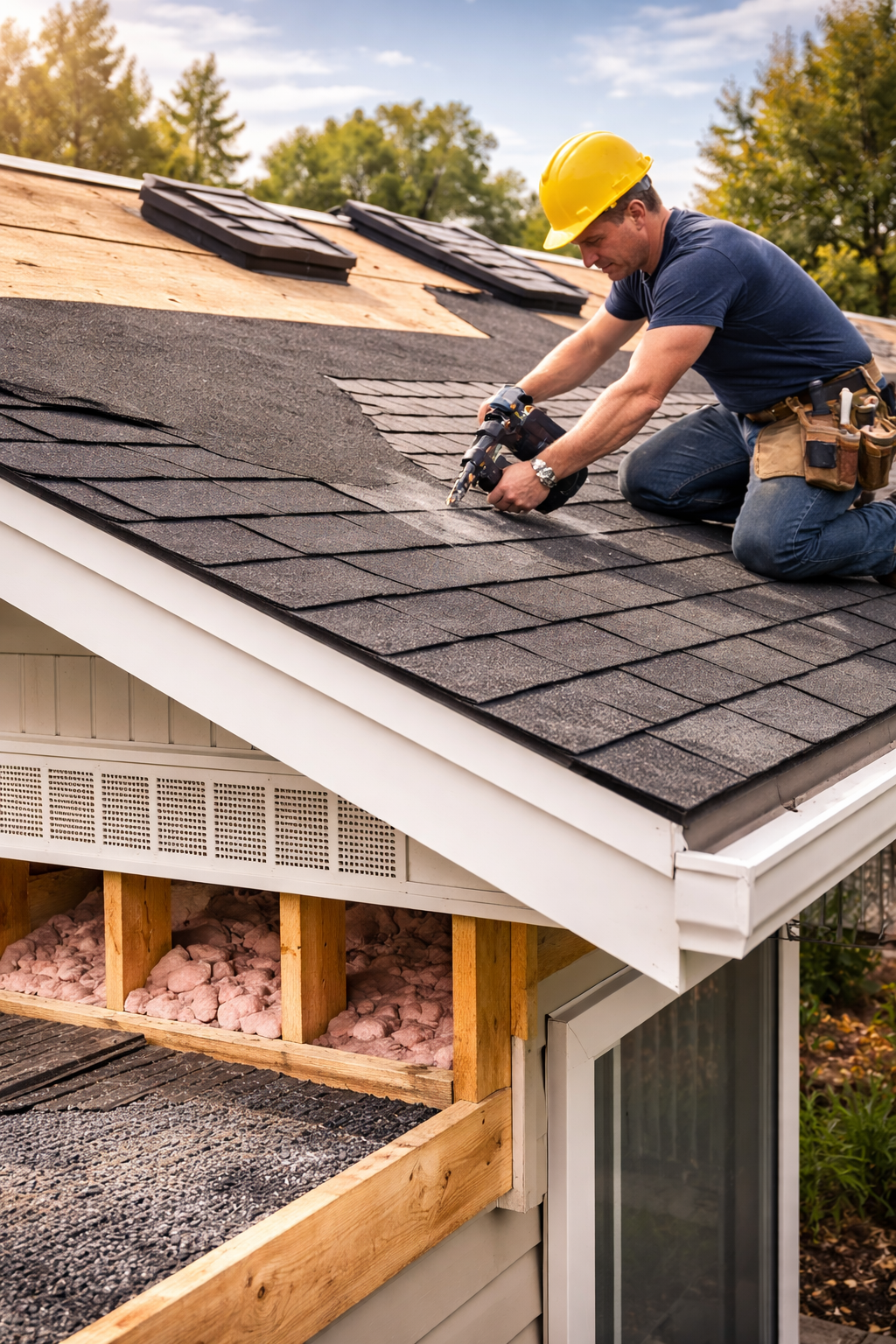
Unlike damaged shingles, intake problems aren’t always visible from the outside. They often remain hidden behind fascia, soffits, or insulation. It’s only when old roofing materials are removed that these issues come fully into view.
Contractors frequently discover crushed vents, undersized openings, or improper installations during replacement. Addressing these hidden problems while the roof is already open is far more effective than attempting piecemeal roof repair later.
Proper Intake Helps the Whole Roof Last Longer
Balanced ventilation supports every component of a roofing system. Shingles stay cooler, decking remains stable, insulation performs better, and framing stays dry. Together, these benefits extend the life of the entire structure.
Roof replacement isn’t just about installing new materials—it’s about correcting the conditions that caused the old roof to fail. Roofing near me professionals consistently see longer-lasting results when intake systems are evaluated and improved as part of the process.
Fleming Roofing helps homeowners look beyond surface materials by evaluating airflow, intake design, and attic conditions during roof replacement projects. Their approach supports long-term performance, fewer repairs, and better protection for the entire structure. By addressing ventilation intake early, Fleming Roofing helps ensure new roofs deliver the durability and value homeowners expect.